Skip to content

Guide

Acrylic sheet weight calculator

Calculate the weight of an acrylic (Plexiglass) sheet from thickness and size; a 3 mm, 125 × 205 cm sheet is preset.

Quick start

Choose your sheet

Sheet material

Acrylic (PMMA) · 1 mm thick ≈ 1.19 kg/m²

Tap one of the stock thicknesses below or type it, for example 3.

Enter the size and quantity

Standard sizes (cm)

Type cm, for example 125; “1.25 m” also works. You can also tap a standard size.

A whole number, for example 20. The total weight is based on it.

Transport and pallets (optional)

Estimates the number of pallets and which vehicle carries the order in one trip.

Enter your values; the result appears here.

Asta Reklam · astareklam.com.tr · approximate calculation

Link to this calculation:

What does this page calculate?

The weight of an acrylic (PMMA, Plexiglass) sheet depends on its thickness and size. The tool calculates the weight per square metre (kg/m²), the weight of one sheet, the total order weight and how many people should carry it. Optionally it also shows the number of pallets and which vehicle carries the order in one trip. The page opens with a 3 mm, 125 × 205 cm sheet.

Step by step

  1. Unit weight: kg/m² = thickness (mm) × density (g/cm³). Acrylic density is about 1.19 g/cm³. The unit check is simple: 1 m² of a 1 mm sheet with a density of 1 g/cm³ weighs 1 kg.
  2. Sheet area: width (m) × length (m). A 125 × 205 cm sheet is 2.5625 m².
  3. Sheet weight: unit weight × area.
  4. Total: sheet weight × quantity.
  5. Carrying: one person up to 25 kg, two people up to 50 kg, a vacuum lifter or sheet trolley above that. Sheets with a long side of 3 m or more are carried by at least two people.

Acrylic weight by thickness

Thickness kg/m² 125 × 205 cm 205 × 305 cm
2 mm 2.38 6.10 kg 14.88 kg
3 mm 3.57 9.15 kg 22.32 kg
5 mm 5.95 15.25 kg 37.20 kg
8 mm 9.52 24.40 kg 59.52 kg
10 mm 11.90 30.49 kg 74.40 kg

Example: 3 mm acrylic, 125 × 205 cm

Unit weight 3 × 1.19 = 3.57 kg/m². Area 1.25 × 2.05 = 2.5625 m². One sheet weighs 3.57 × 2.5625 ≈ 9.15 kg and one person can carry it. Four sheets weigh about 36.6 kg in total. A 205 × 305 cm sheet of the same thickness is 22.3 kg; it stays under 25 kg, but the long side exceeds 3 m, so it should be carried by two people.

How to use the result

The calculation uses nominal thickness and density. The actual sheet thickness may differ by a few per cent within tolerance, and the protective film adds a little weight. Leave a margin when choosing support profiles, screws and anchors. For a job with offcuts, first find the number of sheets with the cutting calculator, then enter the quantity here. Add the result to the basket and request a quote; our branch will reply with price and stock.

Source: acrylic density from the AC Plastics “Guide to Plastic Weights” table and the Pleksionline wholesale page (1 mm ≈ 1.19 kg/m²). Carrying thresholds are suggestions based on general manual handling guidance. Values are approximate; check against the data sheet of the stocked product.

Last updated: 20 October 2026 · Full tool page
How does it work?

How does it work?

Unit weight × area × quantity; data sheet table for aluminium composite.

  1. Choose the material

    Acrylic, ACM, PVC foam, polycarbonate, PETG or MDF.

  2. Thickness and size

    Tap a stock thickness and a standard size, or type your own.

  3. See the weight

    kg/m² = thickness (mm) × density (g/cm³); sheet and total weight, carrying advice.

  4. Plan the delivery

    Optionally show pallets and vehicle fit; add the result to the basket.

Frequently asked questions

How much does 1 m² of acrylic weigh?

Acrylic has a density of about 1.19 g/cm³, so every millimetre of thickness adds 1.19 kg per square metre. 3 mm acrylic is 3.57 kg/m², 5 mm 5.95 kg/m² and 10 mm 11.9 kg/m².

How heavy is a 3 mm acrylic sheet of 125 × 205 cm?

The sheet area is 1.25 × 2.05 = 2.5625 m². Multiplied by 3.57 kg/m² that is about 9.15 kg. Four sheets weigh about 36.6 kg.

Do cast and extruded acrylic weigh differently?

Their density is almost the same (about 1.19 g/cm³). The difference comes from thickness tolerance; cast sheet can deviate more than extruded. The result can therefore vary by around ±5%.

Is acrylic lighter than glass?

Yes. Glass is about 2.5 g/cm³ and acrylic 1.19 g/cm³; at the same thickness acrylic weighs less than half as much. 5 mm glass is roughly 12.6 kg/m², 5 mm acrylic 5.95 kg/m².

Can one person carry a large acrylic sheet?

The tool suggests one person up to 25 kg, but sheets with a long side of 3 m or more should be carried by two people even when light. A 205 × 305 cm, 10 mm acrylic sheet weighs about 74.4 kg and needs lifting equipment.

Related products

  • Acrylic Plexiglass Sheet

    Acrylic Plexiglass Sheet

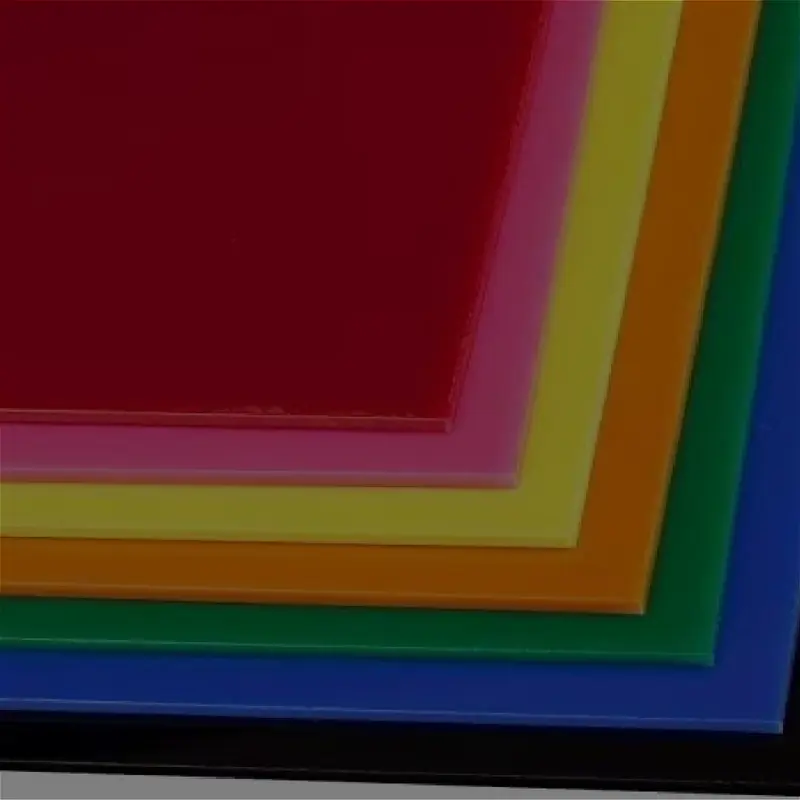
    Acrylic (plexiglass, PMMA) is a crystal-clear plastic sheet that is lighter than glass and impact-resistant. It is heat-formed and cut by laser and CNC; in 2–50 mm thicknesses and clear, opaque and fluorescent colours it is used for signs, lighting and furniture.

  • Cast Acrylic Sheets

    Cast Acrylic Sheets

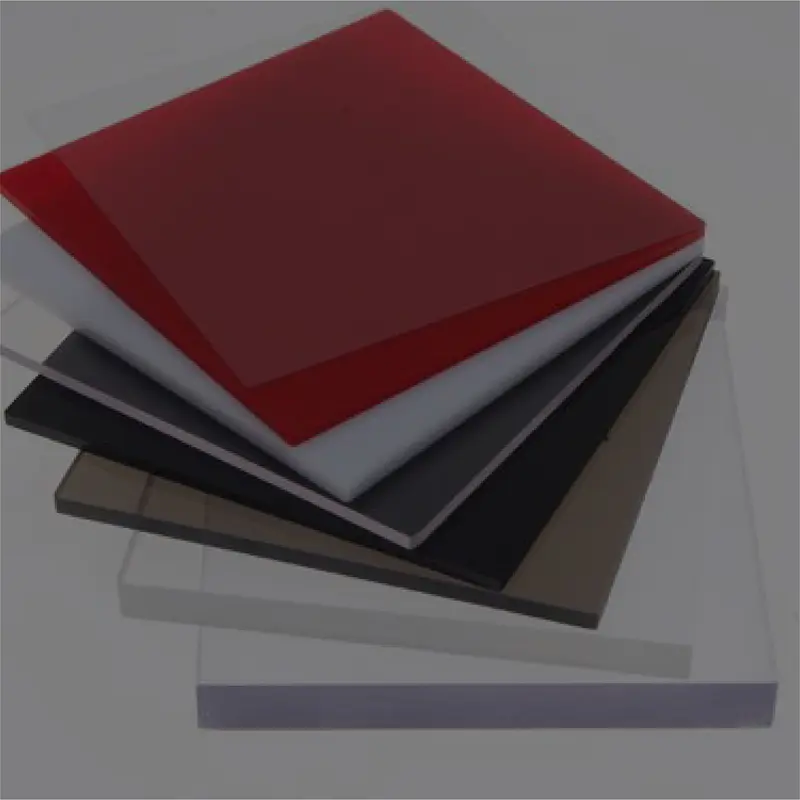
    Cast acrylic is acrylic sheet made by pouring MMA raw material between glass moulds and heating it. It is available in 1–40 mm thicknesses and a wide colour range and suits laser, CNC and heat forming.

  • Extruded Acrylic Sheets

    Extruded Acrylic Sheets

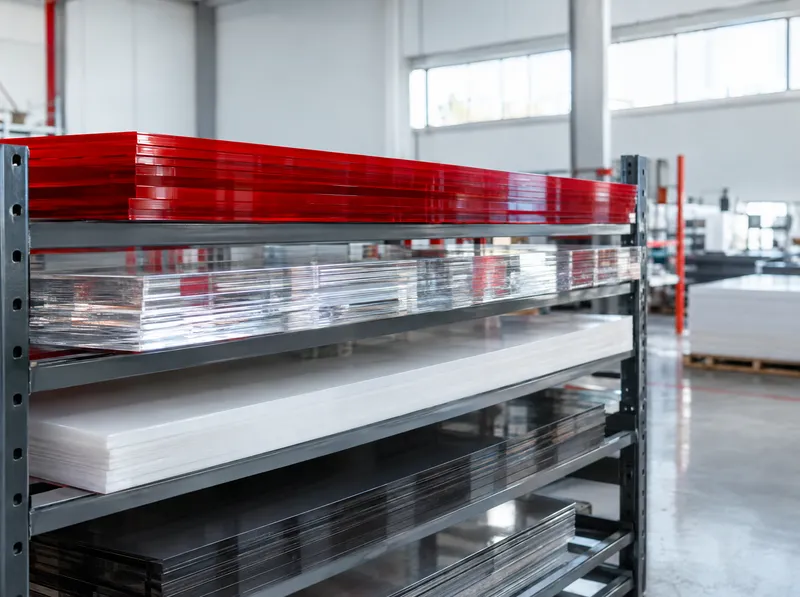
    Extruded acrylic is acrylic sheet made by drawing PMMA into sheets on an extrusion line. It is much lighter than glass, transmits about 92% of light, has tight thickness and size tolerances and is quick to produce.

  • Mirror Acrylic Sheets

    Mirror Acrylic Sheets

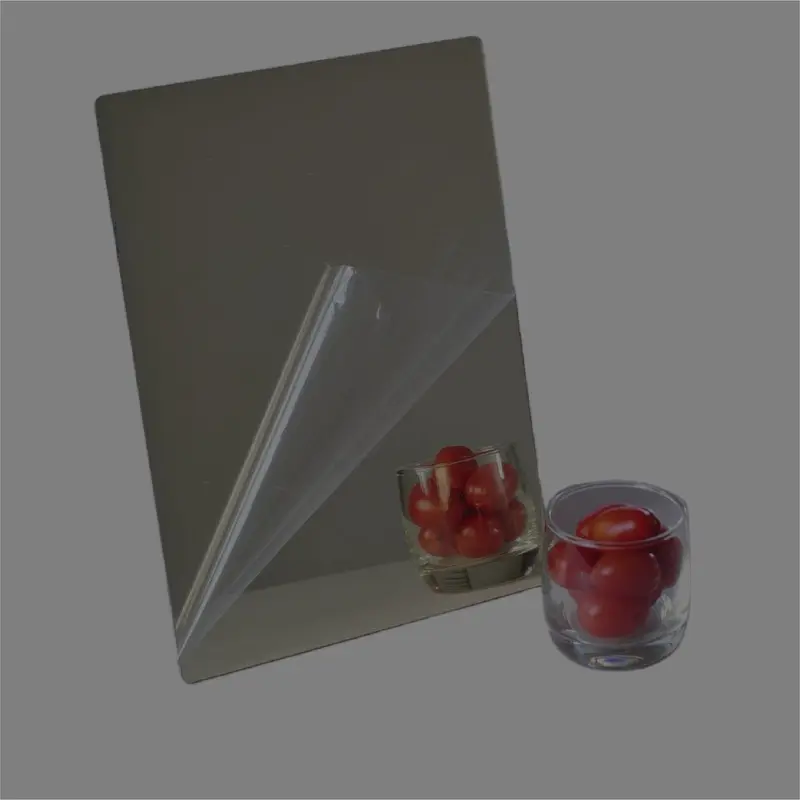
    Mirror acrylic is acrylic (PMMA) sheet with a mirror coating on one face, a lightweight, shatter-safe alternative to a glass mirror. It comes in 1220 × 2440 mm and in 1, 1.8 and 2.8 mm thicknesses; the 1 mm type is self-adhesive.

Related product groups

  • Sheet Products

    17 products