Skip to content

Guide

Vinyl roll length calculator

Calculate the length left on a vinyl roll from its outer diameter; the wrap thickness including film, adhesive and liner is preset. A 50 m cast vinyl example is ready.

Quick start

Measure your roll

Material on the roll

Effective thickness ≈ 220 µm · 50 m roll

Measurement method

Enter the diameter of a new roll and today’s diameter in mm. The most practical accurate way.

Measure across the outermost wrap, for example 120 mm (you can type 12 cm).

Measure a new roll of the same product, for example 145 mm.

The length on the roll label, for example 50 m.

Advanced settings

A 3″ core with its cardboard is usually 83 mm.

If entered, the remaining m² is calculated too, for example 126.

Enter your values; the result appears here.

Asta Reklam · astareklam.com.tr · approximate calculation

Link to this calculation:

What does this page calculate?

Knowing how much is left on a vinyl roll makes job planning easier before printing or cutting. The tool calculates the remaining length from today’s outer diameter, the core’s outer diameter and the wrap thickness, plus the share of a full roll and the remaining m² from the roll width. The page opens with the diameter method and a 50 m, 152 cm wide cast print vinyl.

Step by step

  1. Core: a 3-inch core is 76 mm inside; the formula uses the outside of the cardboard (usually 82–84 mm). Measuring it is best.
  2. Outer diameter: measure across the outermost wrap with calipers or a tape; measure in a few places and average.
  3. Wrap thickness: choosing a material loads film + adhesive + liner as a preset; change it if needed.
  4. Calculation: L = π × (D² − d²) ÷ (4 × t). All sizes in millimetres; the result is converted to metres.
  5. Uncertainty: thickness is taken as ±10% to give lower and upper bounds.

Preset wrap thicknesses

Material Effective thickness Basis
Calendered vinyl 0.22 mm ORACAL 651 film 70 µm + liner 137 g/m²
Cast vinyl 0.23 mm Avery MPI 1105 film + adhesive 80 µm + liner 155 g/m²
Overlaminate 0.17 mm film ~40 µm + liner (estimate)
PVC banner 0.45 mm unsourced estimate

Example: 50 m cast vinyl, 130 mm diameter

Core 83 mm, wrap 0.23 mm. The remaining length is π × (130² − 83²) ÷ (4 × 0.23) ≈ 34.2 m, about 68% of a full roll. At 152 cm width the remaining area is about 52 m². With thickness uncertainty the result lies between 31.1 and 38.0 m. Had the same roll been calculated with film + adhesive only (0.08 mm), it would show 98 m; that is why the liner must always be included.

How to use the result

Presets vary by brand. If you measure a full roll once and use the calibration tab, later readings become much more accurate; with an accurate scale the weight tab is the most reliable. If the remaining length is not enough for your job, add the same product and roll width to the basket and request a quote; our branch will reply with price and stock.

Source: ORACAL 651 and Avery MPI 1105 technical data sheets (film, adhesive and liner weight); formula from a Signs101 table and the ring-area derivation. Liner thickness was estimated from its weight; banner and mesh values are unsourced; values are approximate.

Last updated: 20 October 2026 · Full tool page

How does it work?

How does it work?

The cross-section area of the material on the roll equals remaining length × wrap thickness.

  1. Choose the material

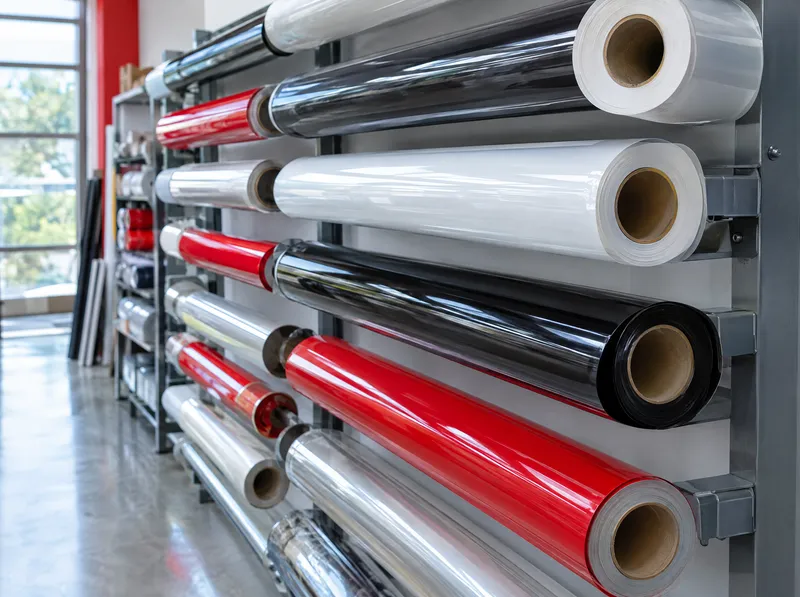
    Calendered or cast vinyl, laminate, banner, mesh or paper; full roll length and width.

  2. Choose the method

    By material thickness (fast), by full-roll diameter (recommended) or by weighing (most accurate).

  3. Measure

    Measure outer and core diameters in mm, or weigh the roll.

  4. See what is left

    Remaining metres, m², share of a full roll and an uncertainty band; if low, add a new roll to the basket.

Frequently asked questions

How is vinyl roll length calculated from the diameter?

L = π × (D² − d²) ÷ (4 × t). For a cast vinyl roll with a 130 mm outer diameter, an 83 mm core and a 0.23 mm wrap, the remaining length is π × (130² − 83²) ÷ 0.92 ≈ 34.2 m.

Which thickness in microns should I use?

The whole wrap, not the film thickness from the data sheet. Avery MPI 1105 has 80 µm film plus adhesive and a 155 g/m² liner; together about 0.23 mm. ORACAL 651 has 70 µm film, about 0.22 mm with its liner. The tool loads these values as presets.

What if I enter only the film thickness?

The remaining length comes out far too high. The same 130 mm roll calculated with 0.08 mm shows 98 m, twice a 50 m roll. In that case the tool warns that the result exceeds a full roll.

Does it work for laminate and banner too?

Yes. There are separate presets for overlaminate, PVC banner, mesh and digital print paper. Banner and mesh values are unsourced estimates; use the calibration or weight tab for the most accurate result.

What are the lower and upper bounds?

In the diameter method the wrap thickness is assumed uncertain by ±10%. For a 34.2 m result the range is 31.1–38.0 m. Calibration narrows this range considerably.

Related products

  • Printable Cast Vehicle Wrap Film

    Printable Cast Vehicle Wrap Film

    Printable cast film is a thin, flexible, printable film made with cast PVC technology and used for vehicle wrapping. It conforms to recessed and curved surfaces and is used with solvent, eco-solvent, latex and UV printers.

  • Cut Vinyl Films

    Cut Vinyl Films

    Plotter cut film is coloured, self-adhesive PVC vinyl made for cutting letters, logos and shapes on a cutting plotter. It is usually 50–150 micron thick and used for signs, shop windows, vehicle graphics and interior decoration.

  • Cast Vehicle Wrap Films

    Cast Vehicle Wrap Films

    Cast vehicle wrap films provide high performance, offering aesthetics and durability especially on vehicle surfaces. With a wide range of colours and surface finishes, they deliver professional results on glossy, matt, carbon-pattern and metallic surfaces.

  • One-Way Vision Film (Perforated Film)

    One-Way Vision Film (Perforated Film)

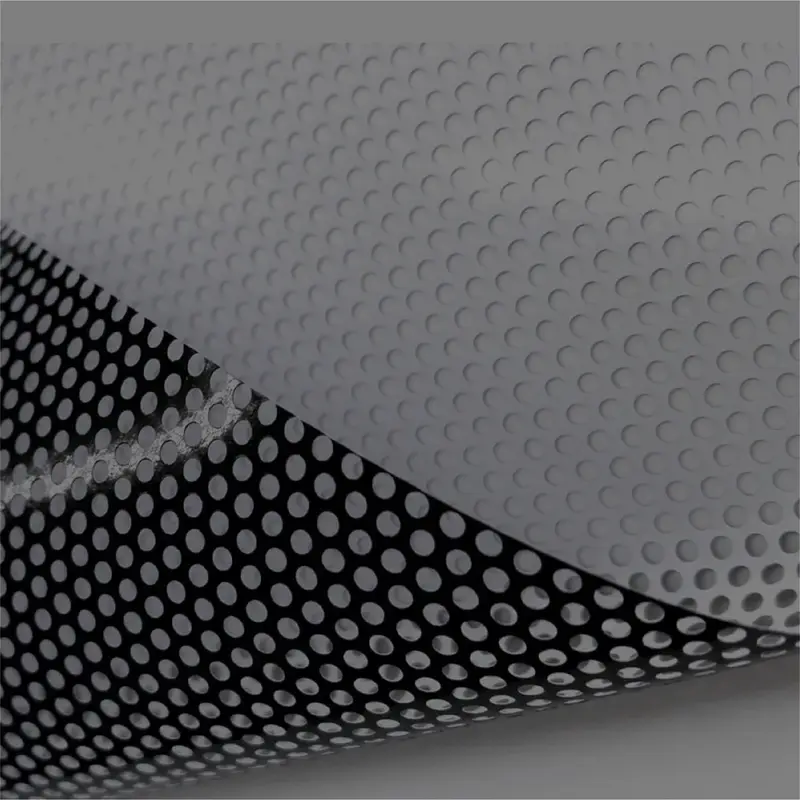
    One-way vision is a type of film used on glass surfaces to let people see out comfortably from the inside while preventing people from seeing in from the outside. Commonly known as "perforated film", it is often preferred especially on shop windows, office glass and vehicle windows.

Related product groups