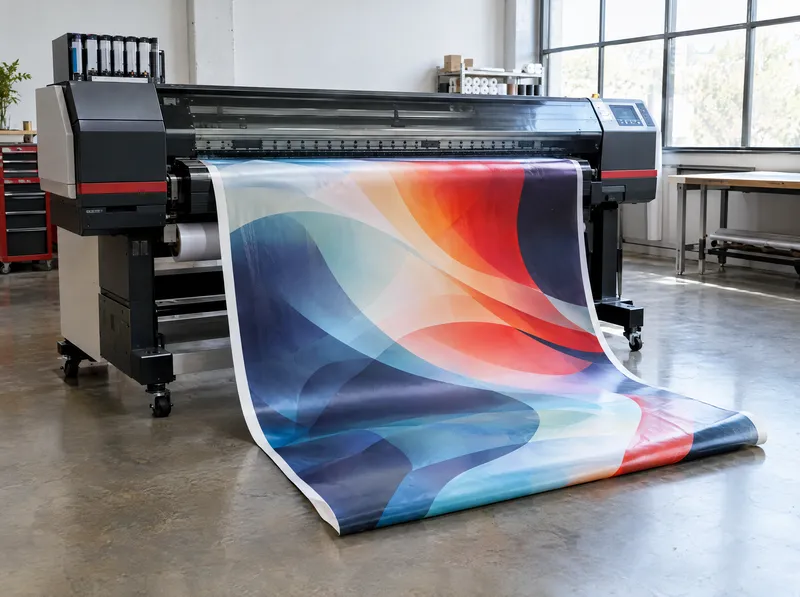
Digital Printing Products
9 products
Rolls
Measure the roll diameter or weigh it; see how many metres are left and whether it is time for a new roll.
Quick start
Measure across the outermost wrap, for example 120 mm (you can type 12 cm).
Measure a new roll of the same product, for example 145 mm.
Film + adhesive + liner; filled in when you choose a material (e.g. 0.22).
Put the roll on the scale, for example 9 kg.
A new roll of the same product, for example 17 kg.
The length on the roll label, for example 50 m.
A 3″ core with its cardboard is usually 83 mm.
Weigh the empty core of a finished roll; usually 0.5–0.7 kg.
If entered, the remaining m² is calculated too, for example 126.
Enter your values; the result appears here.
Remaining length
| Material | Quantity |
|---|
Notes
Thickness, core and roll sizes are sourced estimates; calibrating with your own roll gives the most accurate result.
Could not copy automatically. Select the link and copy it.
Approximate estimate; check dimensions before ordering.
This result is an approximate preliminary estimate; dimensions and product values must be checked before ordering materials and before production. Contact our branch for exact quantities and prices.
The cross-section area of the material on the roll equals remaining length × wrap thickness.
Calendered or cast vinyl, laminate, banner, mesh or paper; full roll length and width.
By material thickness (fast), by full-roll diameter (recommended) or by weighing (most accurate).
Measure outer and core diameters in mm, or weigh the roll.
Remaining metres, m², share of a full roll and an uncertainty band; if low, add a new roll to the basket.
The cross-section of the material (outer circle minus core) equals remaining length times wrap thickness: L = π × (D² − d²) ÷ (4 × t). D is the outer diameter, d the core’s outer diameter and t the total thickness of one wrap.
Not just the film, but film + adhesive + release liner. ORACAL 651 film is 70 µm, yet with its liner one wrap is about 0.22 mm. Calculating with film thickness alone can overstate the remaining length about threefold.
The full roll length is on the label; measure its outer diameter once and the tool works out the real wrap thickness. You no longer need to guess liner and adhesive thickness; the remaining length follows from the ring area of today’s diameter relative to the full one.
If you have an accurate scale it is the most accurate method: remaining = full length × (weight today − core) ÷ (full weight − core). It is not affected by millimetre errors in diameter; take the core weight from the cardboard of a finished roll.
The tool shows a lower and upper bound: ±10% thickness for the diameter method, ±2 mm diameter for calibration, ±0.1 kg for weight. Loose or telescoped rolls hold less. For critical jobs compare with a new roll.
9 products
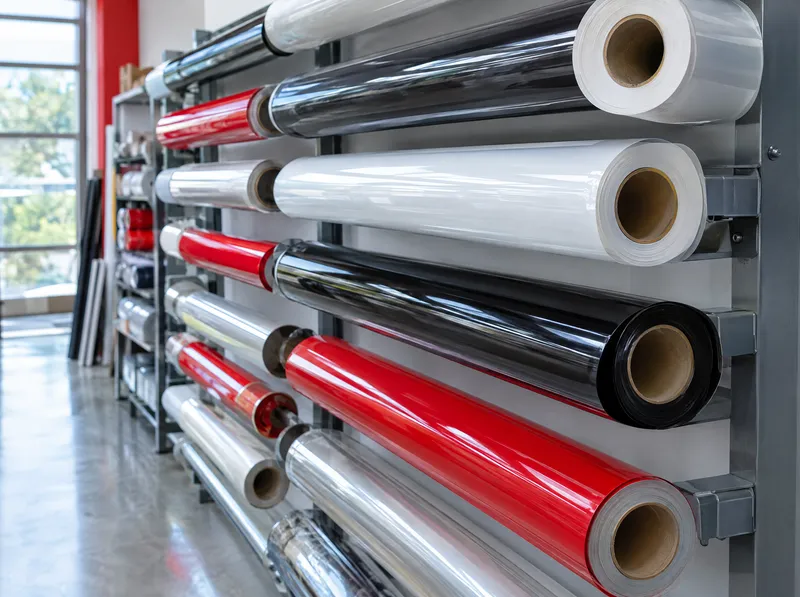
15 products