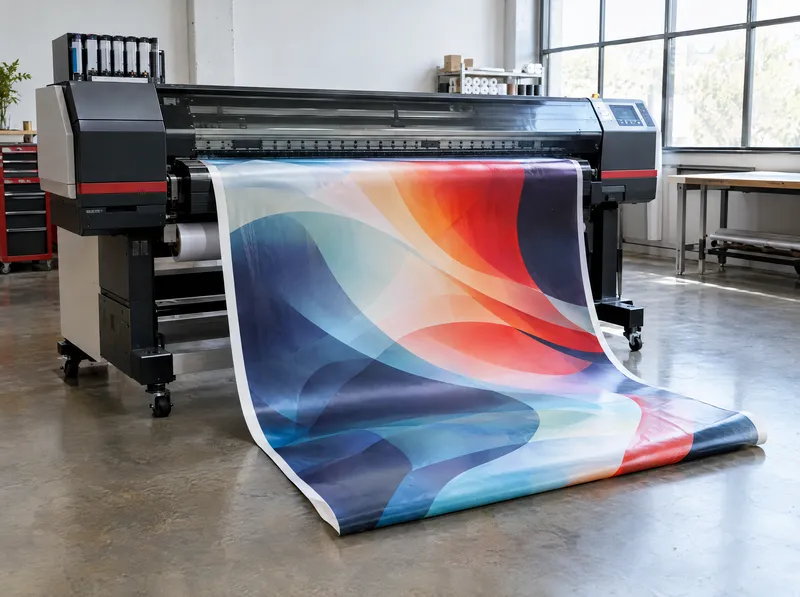
Digital Printing Products
9 products
Tool
Enter your sizes to see print area, strips and seams by roll width, roll length and grommet count instantly.
Weights from our product pages; ask our branch for current stock.
Enter finished (visible) sizes. Values are read as cm; you can also type “3 m”, “3.5m” or “3000 mm”.
Approximate calculation. This result is an approximate preliminary estimate; dimensions and product values must be checked before ordering materials and before production. Contact our branch for exact quantities and prices.
Enter the width and height of at least one job.
Summary
| Material | Quantity |
|---|
Seams and material use for the same jobs on each stock width. Extra material is roll waste, hems and allowance relative to net print area.
| Roll width | Seams | Jobs with seams | Length | Used | Extra material | Select |
|---|
| Job | Finished size | Qty | Layout | Seams | Length | Grommets |
|---|
The roll runs left to right; the height is the roll width. The hatched area is roll waste. Sizes include hems.
Add the calculation to the project basket and request one quote together with your other calculations. The branch nearest to you will get back to you.
Dealer loginIf you are a dealer, see prices and stock in the Dealer Portal.Become a dealer
Ask by phone: 0850 441 58 27The tool adds hem and pocket allowances to each finished size, lays the job on the roll width and compares the result for every stock roll width.
Net m² = width × height × quantity. Adding hems, pockets and waste gives the area with allowances.
If the job does not fit the roll width it is split: strips = ⌈(width − overlap) ÷ (roll width − overlap)⌉, seams = strips − 1.
Each edge has ⌈edge ÷ spacing⌉ gaps; including the four corners the total ≈ perimeter ÷ spacing, rounded up.
Rope = perimeter × 1.1. Rolls = total length ÷ roll length, rounded up.
Convert the finished size to metres and multiply: 3 m × 2 m = 6 m², then multiply by quantity. The material you buy is more than that: hems (about 3 cm per edge), waste and roll offcut are added. A 3 × 2 m banner printed on a 320 cm roll uses about 6.9 m² of material.
The common spacing is 50 cm; for façade and scaffolding banners in windy places it is reduced to 30–40 cm. Corners always get a grommet. The approximate count is perimeter ÷ spacing: a 3 × 2 m banner has a 10 m perimeter, so 20 grommets at 50 cm.
If the short side of the job is wider than the roll, it is printed in strips that are overlapped 4–5 cm and welded. The seam runs along the roll direction and is visible up close; it is usually not a problem on façades seen from a distance. The tool also tries rotating the job (if the artwork allows) to avoid the seam.
380 g coated banner is the common, economical choice for short to medium-term outdoor posters, campaign and construction banners. 510 g coated banner is stronger and resists tearing and sagging better; choose it for long-term, large or wind-exposed installations.
On building façades, scaffolding wraps and large wind-exposed surfaces. Its perforated structure lets part of the wind through and reduces the load on the structure. Colours look slightly lighter than on solid banner, so it is not suited to small text read up close.
9 products
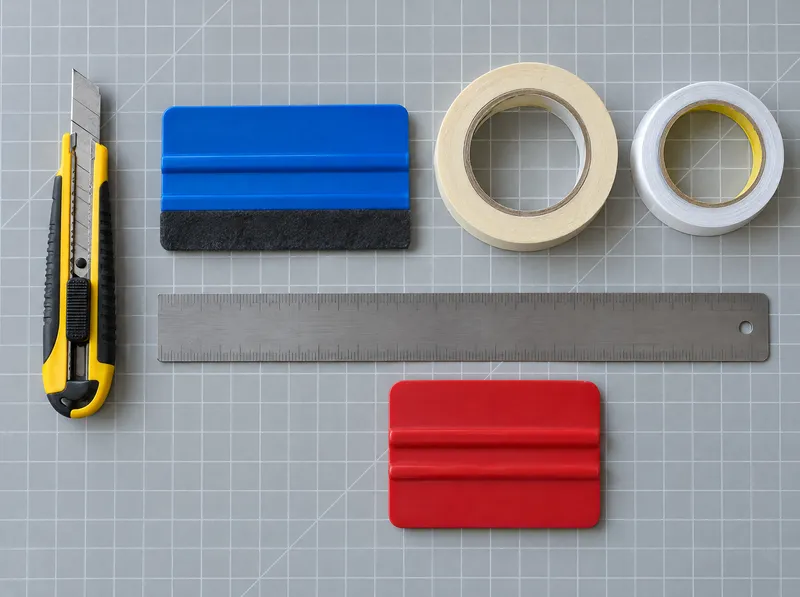
4 products