Aluminium Composite Panel Guide: Thickness, Size, Colour
Signage composite panels: 3 and 4 mm thickness, sizes, colours and surfaces, use as a sign base, cutting and bending tips.
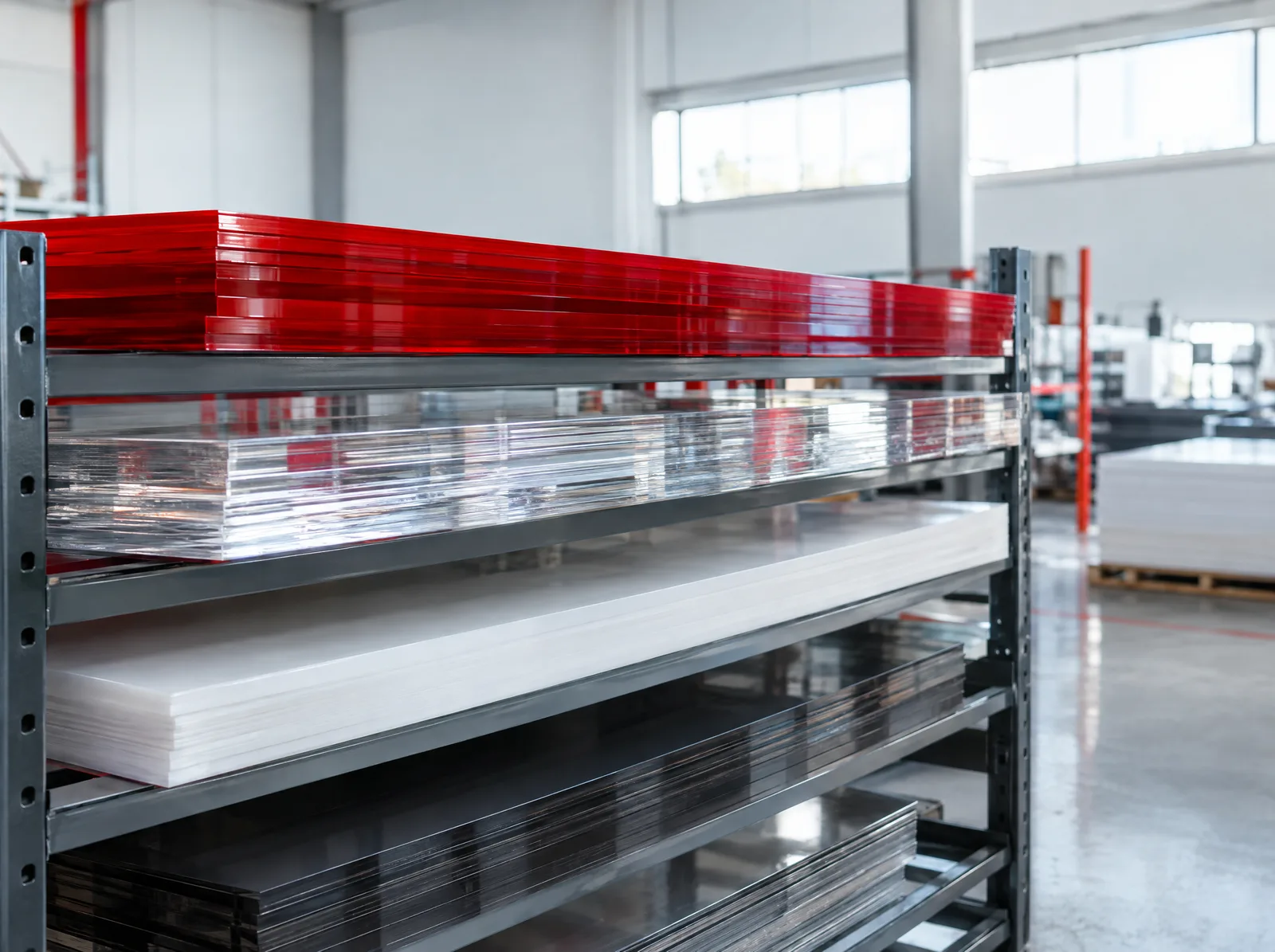
An aluminium composite panel is a sandwich of two thin aluminium skins around a polyethylene core. It is light, flat, durable and easy to work, so it is widely used as a sign base, facade cladding and board surface. The painted face carries a protective film; remove it after fabrication.
Thickness and sizes
Stocked thicknesses are 2, 3 and 4 mm. 3 mm suits most sign bases; 4 mm is stiffer for large formats. The aluminium skin thickness varies by maker (commonly about 0.21 to 0.50 mm) and appears on the datasheet. Examples from our stock list:
| Thickness | Size (cm) | Colour |
|---|---|---|
| 3 mm | 122×244, 125×305, 150×305 | White |
| 3 mm | 150×305 | Grey, black |
| 4 mm | 125×590 | Anthracite, white |
| 4 mm | 125×320, 125×580 | Red |
Stock changes; confirm with your branch.
Colours and surfaces
White, grey, anthracite, black and red are stocked, plus satin surfaces. Colours differ on screen, so ask for a sample panel or colour chart (“kartela”) for important colours, and buy all panels of a job from one batch.
Use, cutting and bending
Use it for flat signs, channel-letter backing, facade bands, totems and direct UV printing. Clean with isopropyl alcohol before applying vinyl. Cut with a fine-tooth saw or CNC router; bend by routing a V-groove in the back and folding. Test on a scrap piece first, and allow for thermal expansion outdoors. The cutting calculator reduces waste. Ready-made scenario: aluminium composite panel cutting plan.
Product: Aluminium composite panel.
FAQ
Which thickness should I choose?
3 mm for most signs, 4 mm for large, stiff surfaces.
Can composite panel be bent?
Yes, by routing a V-groove in the back face.
Can it be printed on?
Yes, by direct UV printing or by applying printed vinyl.
This article contains general information; confirm dimensions and technical values before production.